
Digital Twins
Staged and maintained across the lifespan of major assets and infrastructure projects.
Connecting models, data, systems and stakeholders through one governed asset - our Digital Twins evolve progressively.
From spatial, to operational and predictive, the result is a persistent interactive, data driven environment for understanding, communicating and operating complex built environments.

Stage 1 - Spatial
For Design & Construction
Function: Communication and decision velocity
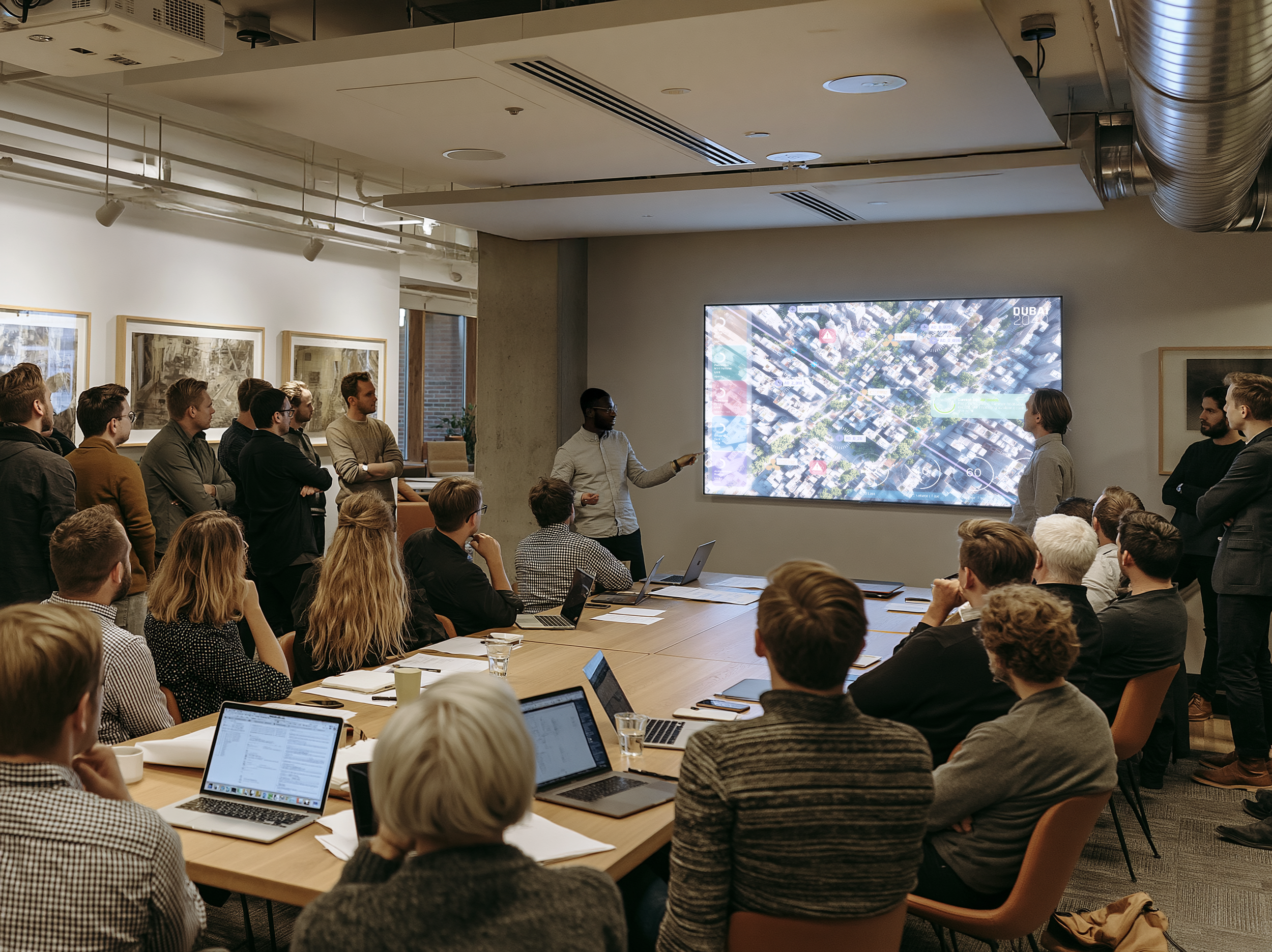
Stage 1 is the Spatial Digital Twin, a persistent, interactive 3D environment that gives a project or asset a shared spatial reference before, during and after delivery.
During design and construction, it brings models, options, phasing, programme information and stakeholder inputs into one interactive, navigable context, helping teams understand proposals, test scenarios, communicate and reach decisions faster.
It can begin as a simple navigable massing model with options, or develop into a governed project environment that supports optioneering, coordination, phasing, change tracking and scenario-based decision making.
Stage 2 - Operational
For: Ops and Facilities Management
Function: Federated data, in spatial context

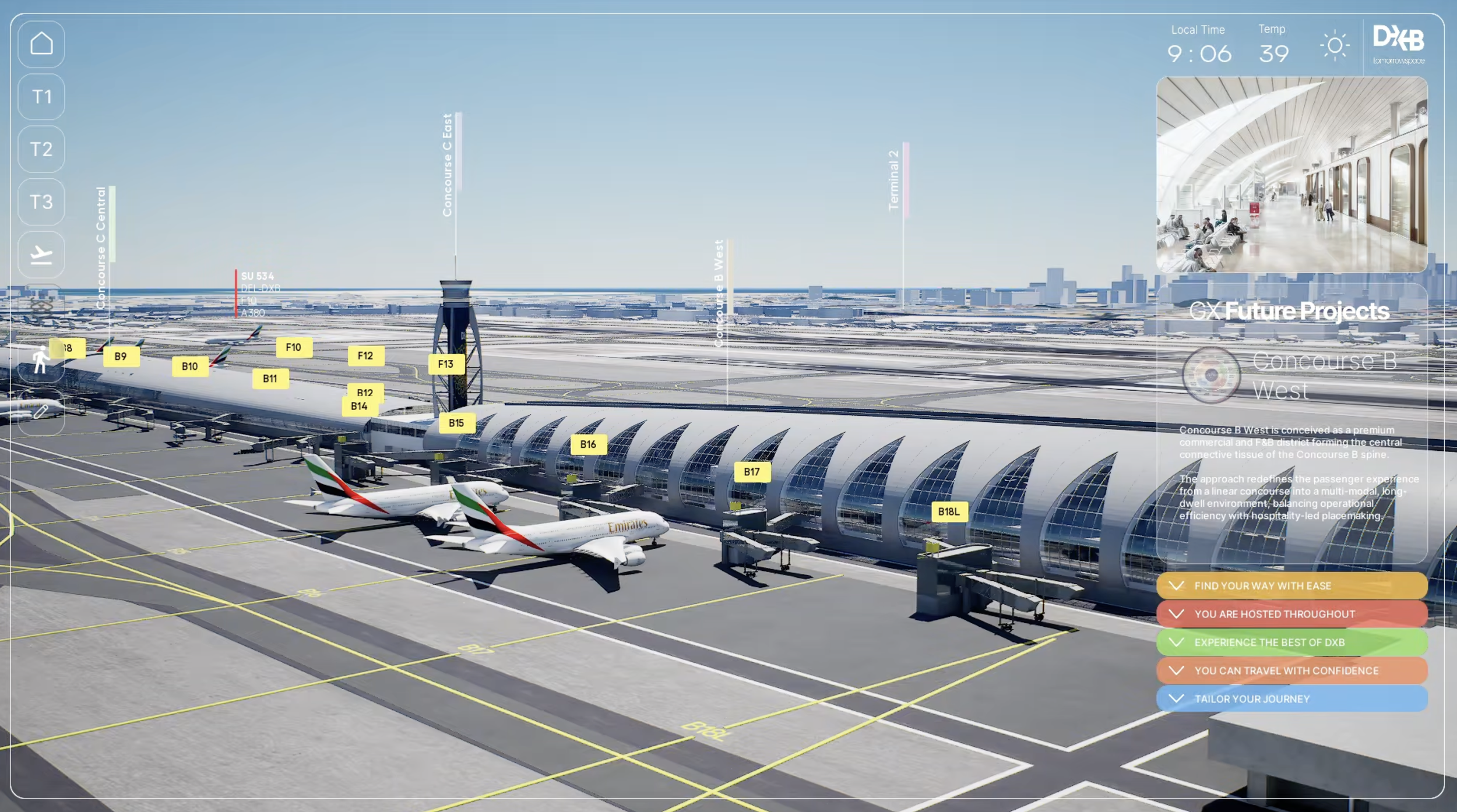
Stage 2 is the Operational Digital Twin - extending the spatial foundation into the live operation of a real-world asset.
It connects operational data, asset information, system status, issues and workflows to the spaces, assets and systems they relate to, giving operators a spatial understanding of what is happening across the built environment.
Rather than replacing existing dashboards, an Operational Twin gives spatial context — helping teams see where something is happening, what it affects and how to respond.
Stage 3 – AI and Predictive (Horizon)
For: Strategic & Operational Planning
Function: AI-ready spatial context
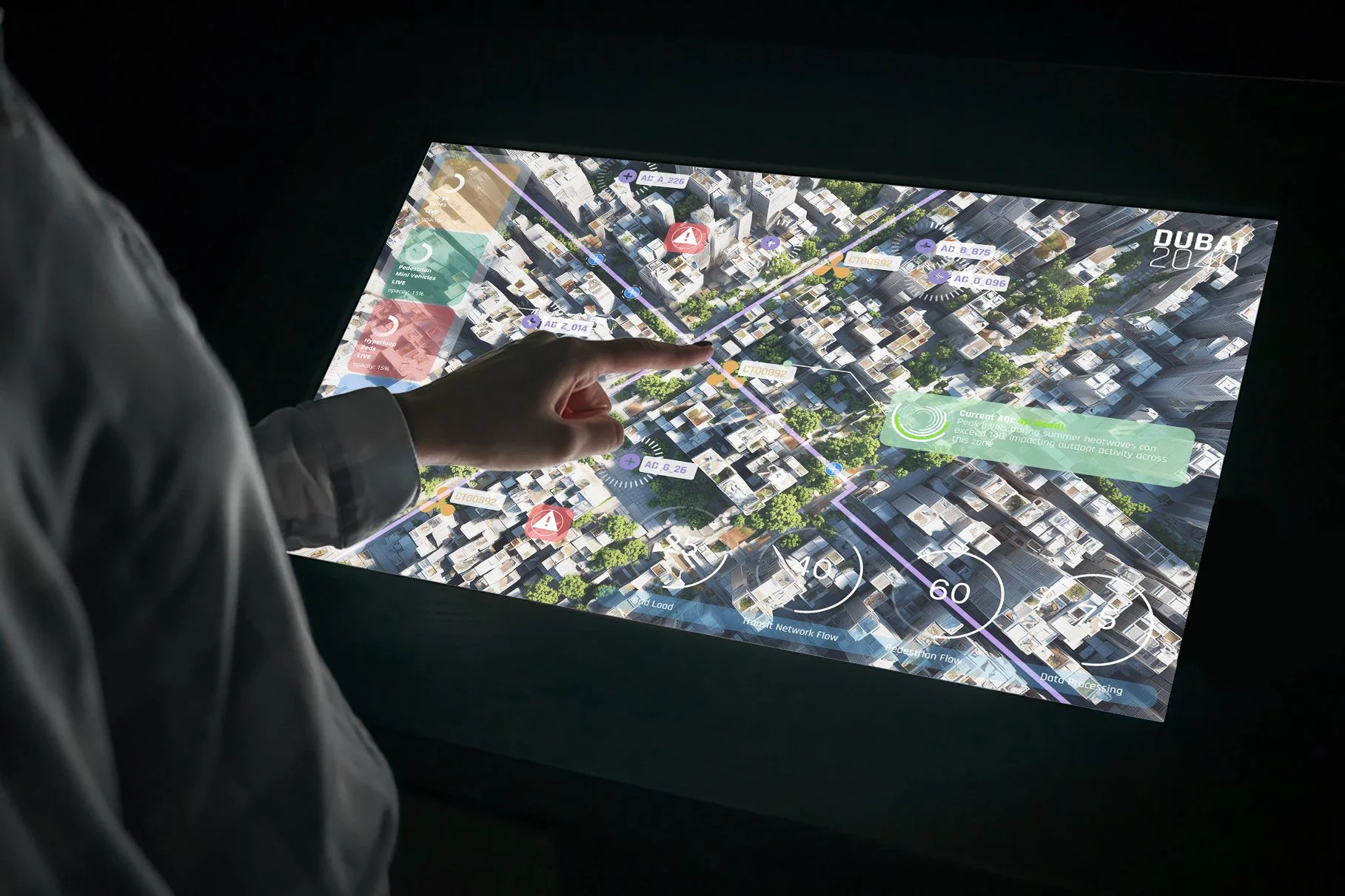
Stage 3 is where the Digital Twin becomes the foundation for AI, simulation and forecasting.
Because dependencies and data hierarchy are preserved from BIM, IFC and COBie, the Twin retains the structure and context that AI and associated operational systems need; what each asset is, what it connects to and what depends on it.
Every twin is built AI-ready from day one. The predictive layer activates as operational data accumulates.
Turning information into understanding.
Contact Us
Have a project in mind?
If you’re working on a complex asset, development or network and need a clearer way to connect models, data and people - get in touch.
info@tomorrowspace.com
For vacancies and any other enquiries, please send an email to info@tomorrowspace.com